



A roof is one of the most important elements of a building. It protects the space below from direct sunlight, rain, wind, dust, and changing weather conditions. However, roofing requirements for residential properties are different from those of industrial buildings such as factories, warehouses, workshops, and production facilities.
For residential buildings, a roof must not only be strong and weather-resistant but also enhance the appearance of the façade and complement the overall architectural concept. In industrial buildings, the roof must be able to cover a much larger area, support operational activities, manage rainwater flow, and protect machinery, stored goods, and workers inside the building.
For this reason, the selection of roofing for homes and industrial buildings should be carefully considered from the planning stage. The material, profile shape, thickness, structural framework, roof slope, and supporting accessories must all be evaluated to ensure long-term protection and optimal building performance.
What Is Roofing for Homes and Industrial Buildings?
The term roofing for homes and industrial buildings refers to roofing systems that offer strength, practicality, and efficiency for both residential and industrial applications.
This concept is becoming increasingly popular because industrial-style design is no longer limited to factories or warehouses. It is now also widely used in homes, commercial units, cafés, workshops, and other commercial buildings.
Visually, industrial design is generally characterized by a bold, modern, simple, and functional appearance. Buildings with this style often feature straight lines, efficient structural systems, and materials that appear strong and durable.
Metal roofing is one of the most commonly used options for this type of design because it provides a modern appearance while also offering reliable protection for the building.
For industrial buildings, the roof serves a much greater purpose than simply covering the structure. It must be able to span a large area, withstand continuous exposure to the weather, reduce the risk of leakage, and maintain suitable conditions in production or storage areas.
Therefore, the roofing material must be selected according to the building’s characteristics and the environmental conditions surrounding it.
Why Is Choosing the Right Roof Important for Homes and Factories?
Choosing an unsuitable roofing system can lead to various long-term problems. Leaks, corrosion, excessive indoor heat, loud rain noise, and recurring repair costs are some of the risks that may occur when the roofing material and installation system are not properly planned.
In residential buildings, a good roof helps create a comfortable living environment. A suitable roof design allows rainwater to flow properly, reduces the risk of water accumulation, and keeps the interior of the house dry.
A neat and well-designed roof can also improve the overall appearance and visual value of the property.
In factories and warehouses, choosing the wrong roof can directly affect business operations. Even a small leak may damage stored goods, disrupt production activities, reduce workplace safety, and temporarily stop operations.
For this reason, industrial buildings require roofing systems that are carefully evaluated in terms of strength, durability, coverage area, and long-term performance.
Characteristics of Roofing for Industrial Buildings
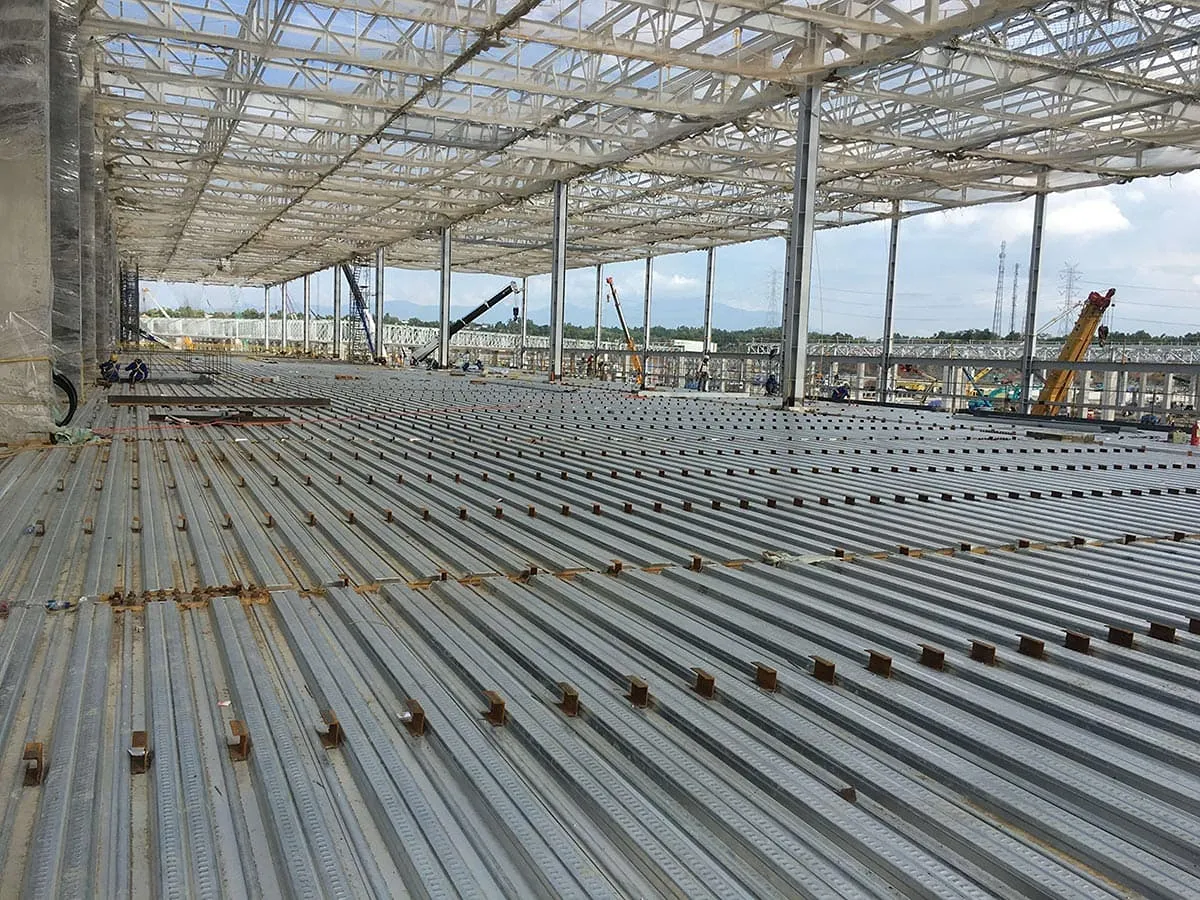
Industrial buildings generally have different structural requirements from ordinary residential buildings. Their larger floor areas, steel framing systems, intensive operational activities, and need to protect equipment mean that roofing specifications must be carefully adapted to each project.
Several important characteristics of roofing for industrial buildings include the following.
1. Ability to Cover Large Areas
Factories and warehouses usually have wider structural spans than residential buildings. Therefore, the roofing material must be suitable for efficient installation across a large area.
Using roofing sheets in appropriate lengths can help reduce the number of joints. Fewer joints may also help minimize potential leakage points.
2. Resistance to Weather Conditions
Industrial buildings are often located in open areas and are continuously exposed to sunlight, heavy rain, humidity, and strong winds.
The roofing material must provide reliable protection and maintain its performance over a long period of time.
3. Support for Effective Rainwater Drainage
The roof slope, profile shape, and gutter placement must be designed to allow rainwater to flow efficiently.
An ineffective drainage system may cause water to accumulate, increase the risk of leakage, and add unnecessary weight to the roof structure.
4. Efficient Maintenance
Factories and warehouses require roofing materials that are practical and easy to maintain.
High-quality roofing can help reduce the need for frequent repairs, particularly in areas that are difficult to access or in buildings with intensive operational activities.
5. Compatibility with the Building Structure
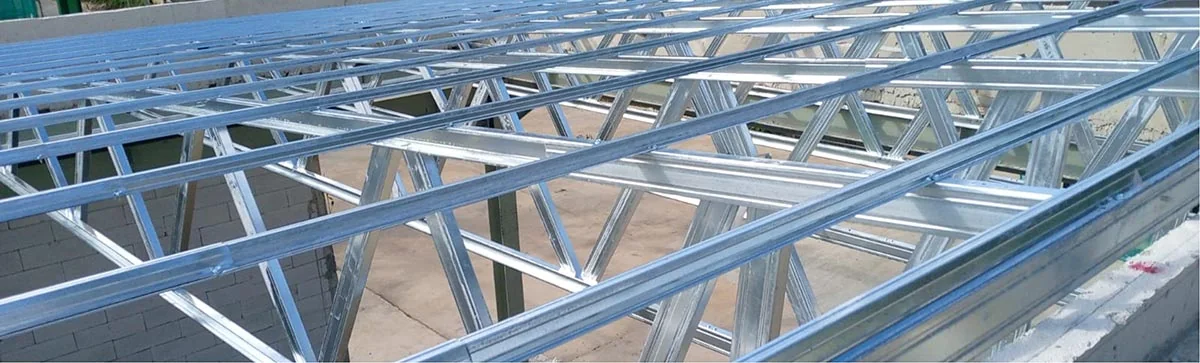
The roofing system must be compatible with the building framework, whether it uses structural steel, lightweight steel, or another type of structural system.
Proper planning helps ensure balanced load distribution and allows the building to function more safely.
Metal Roofing for Industrial-Style Homes
In addition to being widely used for factories and warehouses, metal roofing is becoming increasingly popular for residential properties.
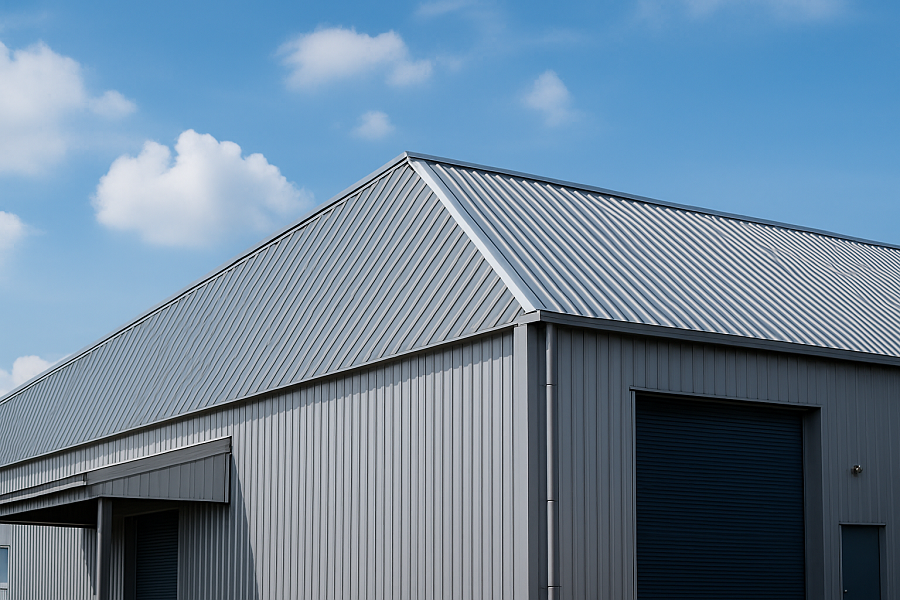
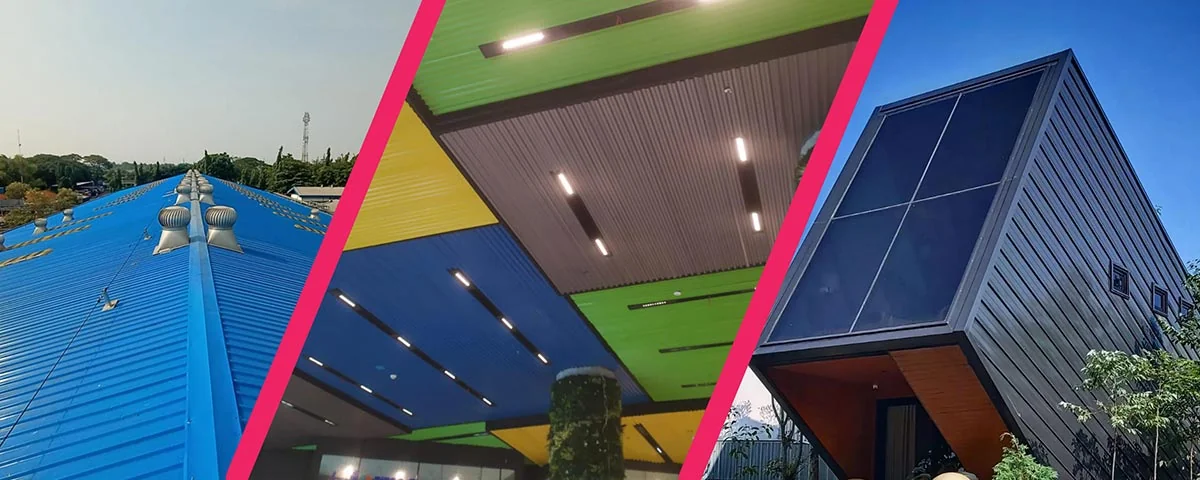
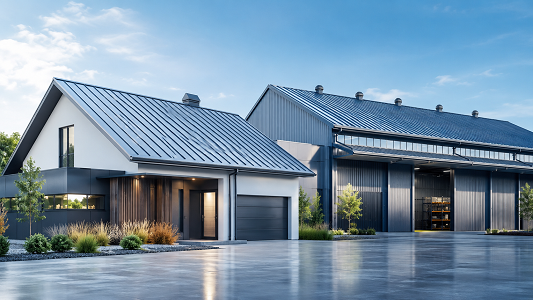
This material is often chosen because it creates a modern, simple, and bold appearance. Metal roofing is suitable for industrial-style, minimalist, and modern tropical homes, as well as commercial buildings such as shops and cafés.
In residential applications, metal roofing can be used for the main roof, carport, terrace, canopy, service area, building extension, or semi-open space.
Choosing the right roof profile can help create a neater façade and give the building a more distinctive character.
However, residential roofing should not be selected solely based on appearance. Property owners must also consider material thickness, roof slope, ventilation requirements, gutter systems, and structural support.
With proper planning, the roof will not only improve the appearance of the building but also perform effectively under Indonesia’s weather conditions.
Advantages of Metal Roofing for Homes and Industrial Buildings
Metal roofing is widely considered for both residential and industrial applications because it offers several advantages.
Lightweight but Strong
One of the main advantages of metal roofing is its relatively low weight compared with several conventional roofing materials.
This can help reduce the load on the building structure, particularly in buildings that use lightweight steel framing or require more efficient load management.
Despite being lightweight, metal roofing can still provide reliable protection when the correct specifications are selected.
Therefore, the thickness and profile of the roofing material should be adjusted to the requirements of the building.
More Efficient Installation
Metal roofing sheets can be installed more efficiently, especially across large building areas.
For factory or warehouse projects, using roofing sheets in suitable sizes can reduce the number of joints and help speed up the installation process on site.
Modern and Neat Appearance
For industrial-style homes, metal roofing can strengthen the architectural character of the building.
Its clean profile lines, bold shape, and modern material appearance can help make the façade look more attractive and organized.
Suitable for Various Types of Buildings
Metal roofing can be used for many types of properties, including homes, warehouses, workshops, factories, garages, commercial buildings, and business facilities.
This flexibility makes metal roofing a practical option for a wide range of construction projects.
Supports Long-Term Efficiency
Choosing high-quality roofing can help reduce the risk of premature damage and repeated replacement.
This is important for homeowners and business owners who want to keep building maintenance costs under control over the long term.
Factors to Consider Before Choosing Roofing for Homes and Industrial Buildings
To ensure that the roof performs optimally, several important factors should be considered before selecting the roofing material and installation system.
1. Determine the Function of the Building
The roofing requirements of a residential property are different from those of a factory.
A home may place greater emphasis on comfort, appearance, and protection from the weather. A factory, on the other hand, requires efficient coverage, structural strength, and protection for operational activities.
The function of the building should be clearly determined so that the roofing specifications can be planned appropriately from the beginning.
2. Consider the Environmental Conditions
The location of the building has a major influence on the selection of roofing materials.
Buildings located in coastal areas, regions with high rainfall, industrial zones, or areas with intense heat exposure require more specific material considerations.
Environmental conditions may also affect ventilation, insulation, drainage, and corrosion-protection requirements.
3. Adjust the Roof Slope
The roof slope plays an important role in directing rainwater.
A roof that is too flat and does not have an appropriate drainage system may increase the risk of water accumulation.
A properly planned slope helps rainwater flow more quickly toward the gutters and drainage channels.
4. Choose the Right Roof Profile
Each roof profile has its own characteristics.
Some profiles are more suitable for residential buildings, while others are designed for factories or warehouses with larger roof areas.
The profile should be selected based on the building design, structural span, direction of water flow, and desired appearance.
5. Consider the Material Thickness
The thickness of the roofing material affects its strength and resistance to environmental conditions.
For industrial buildings with extensive roof areas and greater exposure to the surrounding environment, material thickness should be carefully calculated.
The decision should not be based solely on the initial price. Material quality and building requirements should also be considered to ensure better long-term value.
6. Use Suitable Supporting Accessories
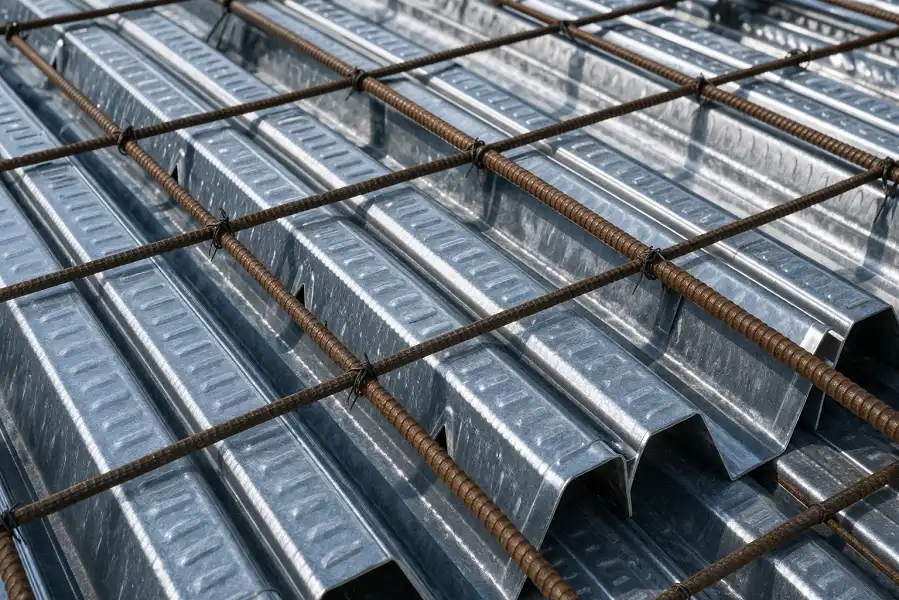
A roofing system requires supporting components to function properly, including ridge caps, flashing, gutters, screws, and joint systems.
Using unsuitable accessories may increase the risk of leakage or result in an untidy final appearance.
Careful detailing is particularly important around roof joints, wall connections, chimneys, ventilation openings, and changes in roof slope.
Common Mistakes to Avoid When Choosing a Roof
There are several common mistakes that should be avoided when selecting roofing for residential or industrial projects.
The first mistake is focusing only on the lowest price without considering the quality of the material.
A low initial price may not provide long-term efficiency if the roofing material is easily damaged and requires frequent repairs.
The second mistake is ignoring the roof slope and drainage system.
Even high-quality roofing can develop problems when rainwater cannot flow away properly.
Another common mistake is using the same roofing specifications for every type of building.
Homes, warehouses, workshops, and factories have different requirements. Each project should therefore be evaluated based on its function, location, size, and structural system.
Property owners must also ensure that the roofing material is compatible with the supporting framework.
High-quality roofing must be supported by a suitable structure to provide safe and durable performance.
Roof Maintenance for Optimal Performance
Although roofing systems are designed to withstand weather exposure, regular inspection and maintenance are still necessary.
Simple maintenance activities can help preserve roof performance and identify problems at an early stage.
Maintenance may include removing leaves and debris from gutters, inspecting joints, ensuring that screws remain secure, checking areas that are vulnerable to leaks, and observing any changes in the shape of the roofing material.
Routine inspections are particularly important for industrial buildings because their roof areas are generally much larger and directly protect stored goods, equipment, and production activities.
With proper maintenance, the service life of the roof can be preserved and the risk of operational disruption can be minimized.
FUMIRA for Metal Roofing and Galvanized Steel Sheet Requirements
Choosing roofing for homes and industrial buildings requires materials that not only support the appearance of the property but also provide long-term protection.
Whether the project involves a residential property, warehouse, workshop, or factory, selecting the right steel sheet material can help create a building that is more efficient, visually organized, and prepared to withstand changing weather conditions.
FUMIRA is one of the largest galvanized steel sheet manufacturers in Indonesia and has been operating since 1970.
The name FUMIRA was formed from the first two letters of the names of its three shareholders: Fuji Steel, which later merged with Yawata Steel to become Nippon Steel Corporation; Mitsui & Co., Ltd.; and Ragam Logam, a subsidiary of the Argo Manunggal Group.
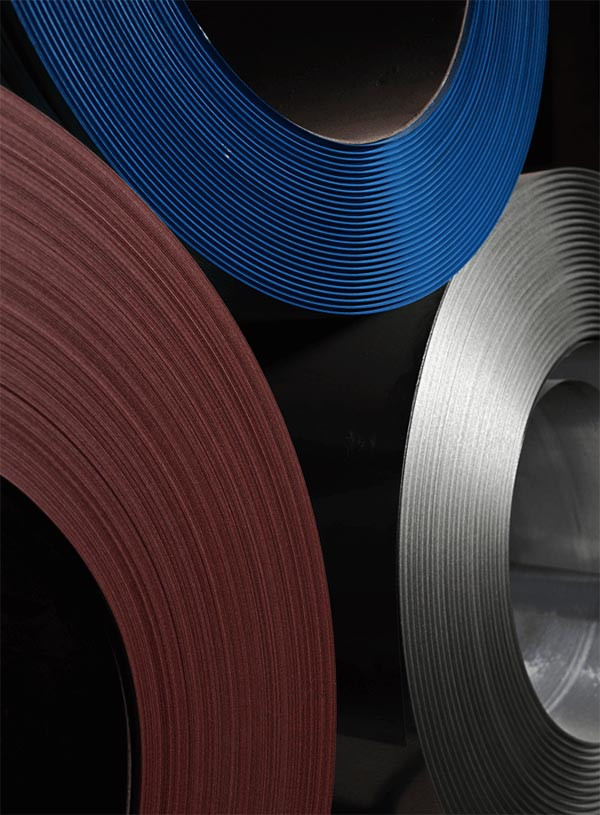
For metal roofing applications, FUMIRA offers metal roofing products with a 100% zinc coating that can be considered for both residential and industrial construction projects.
With decades of experience in the steel industry, FUMIRA can serve as a reliable reference for property owners, contractors, architects, and developers seeking metal roofing and galvanized steel sheet solutions to support stronger, more efficient, and better-protected buildings.