


When constructing houses, shop-houses, warehouses, commercial buildings, or industrial facilities, the roof structure is one of the most important elements that must be carefully planned. A roof protects the interior of a building from heat, rain, and changing weather conditions, but it must also be supported by a strong, stable, and durable framework.
One material that is now widely used for roof framing is lightweight steel truss. Compared with conventional timber framing, lightweight steel offers several advantages, including lower weight, greater dimensional precision, resistance to termites, and a more efficient installation process.
However, before selecting a truss material, it is important to understand that lightweight steel is available with different types of protective coatings. In general, lightweight steel products on the market can be divided into two main categories: galvanized lightweight steel and galvalume lightweight steel. Although galvalume is more commonly found in the market, galvanized lightweight steel has its own characteristics that make it suitable for various construction requirements.
One galvanized lightweight steel product worth considering is FUMIRATRUSS from FUMIRA. This product uses zinc-coated steel designed to provide protection against rust and corrosion, including on areas that may be scratched or exposed during installation.
Understanding Lightweight Steel Trusses for Roof Structures
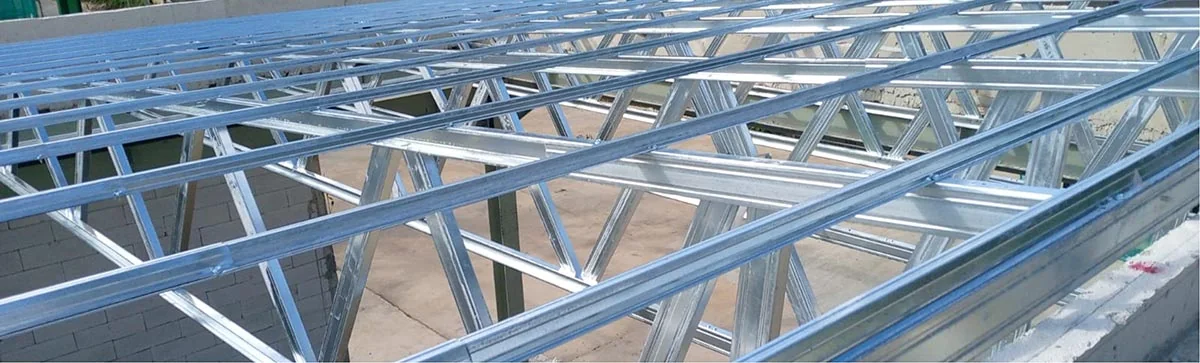
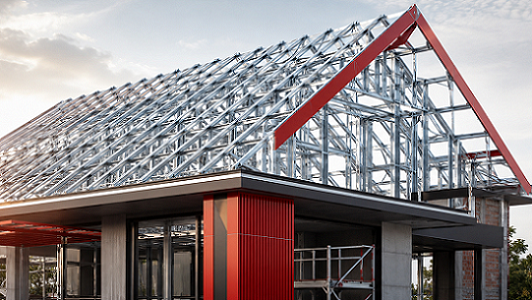
A lightweight steel truss is a roof framing system that uses lightweight steel profiles as the main structural elements supporting the roof covering. These profiles are commonly used to form roof trusses, C-channels, battens, and other supporting components within the roof structure.
The use of lightweight steel has become increasingly popular because it provides excellent strength without adding excessive weight to the building. This makes it particularly beneficial for residential properties, multi-story buildings, shop-houses, warehouses, and other construction projects that require a more efficient structural system.
Unlike timber, lightweight steel does not shrink, is less likely to warp due to changes in humidity, and is not vulnerable to termite attacks. With proper design and structural calculations, a lightweight steel truss system can provide stable support for a wide range of roofing materials.
Lightweight steel profiles are also generally manufactured with precise and consistent dimensions. This helps make the assembly process neater and allows the framework to be adjusted more easily according to the planned roof design.
Differences Between Galvanized and Galvalume Lightweight Steel
Before discussing the advantages of galvanized lightweight steel trusses, it is important to understand the basic differences between galvanized steel and galvalume steel.
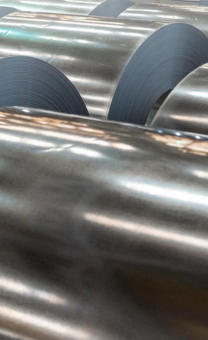
Galvanized lightweight steel is coated with zinc. The zinc layer protects the underlying steel from oxidation, which can lead to rust. Zinc is also known for providing cathodic protection, helping protect exposed or scratched areas of the steel.
Galvalume lightweight steel, on the other hand, is coated with a mixture of zinc, aluminum, and small amounts of other elements. Galvalume is widely available in the market and provides reliable protection for a variety of construction applications.
Both materials can be used for roof framing. However, the selection should not be based solely on price or on which product is most commonly available. The type of coating should be matched to the project conditions, installation environment, aesthetic requirements, and the possibility of contact with other materials, such as cement and mortar.
For projects that prioritize a more elegant appearance, zinc-based corrosion protection, and reliable resistance to contact with cement, galvanized lightweight steel trusses can be an appropriate choice.
1. A Cleaner, More Elegant Appearance
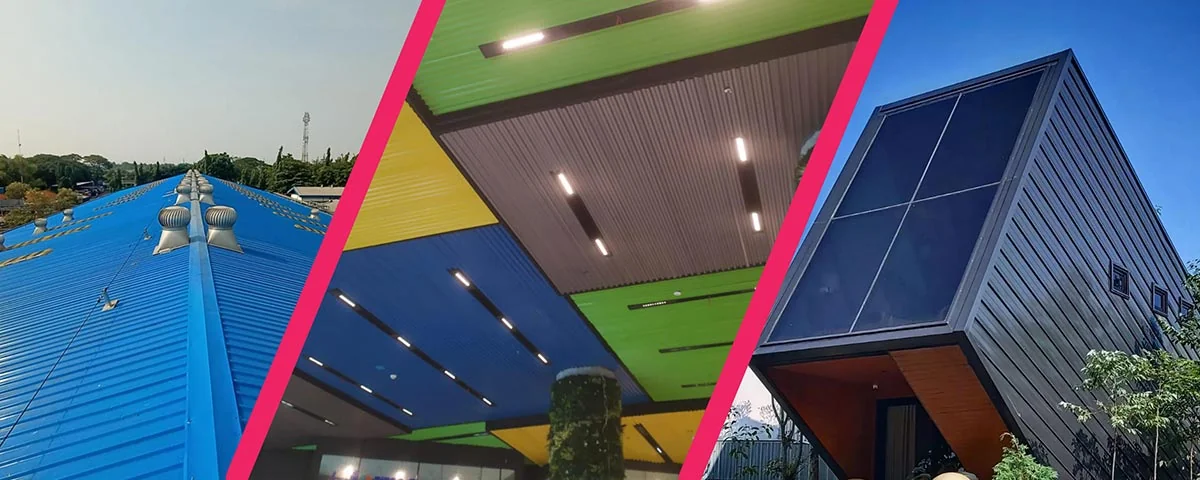
One of the advantages of FUMIRA galvanized lightweight steel is its clean, neat, and elegant appearance. This provides additional value for construction projects that require a professional-looking finish, particularly when parts of the roof frame remain visible through ceiling areas, canopies, or semi-open structures.
The appearance of the material is not only a matter of aesthetics. A uniform and well-finished lightweight steel surface can also create the impression that the structure has been built using high-quality, carefully processed materials.
In modern residential projects, commercial buildings, and industrial facilities, visual details remain an important consideration. A neatly installed framework helps make the overall building appear more organized and professionally constructed.
In addition, precisely manufactured profiles make it easier to connect individual components. As long as the installation follows proper structural calculations, the finished roof frame can appear straighter and more consistent.
2. Maximum Protection Against Corrosion
Corrosion is one of the main risks associated with steel materials. Indonesia has a tropical climate characterized by high humidity, heavy rainfall, and temperature fluctuations, all of which can affect construction materials over time.
Galvanized lightweight steel uses a zinc coating as its primary protection against rust. This coating helps reduce direct contact between the base steel and the surrounding air and moisture.
One of zinc’s most important advantages is its cathodic protection. When small scratches or exposed areas occur during cutting, drilling, or screw installation, the zinc can help protect those areas from corrosion. FUMIRA explains that zinc provides cathodic protection to scratched or exposed areas when they come into contact with air.
This characteristic is particularly important in lightweight steel truss applications. During installation, the profiles are commonly cut, drilled, or connected using screws. These connection points require reliable protection to help maintain the long-term durability of the structure.
With an appropriate zinc coating, FUMIRA galvanized lightweight steel can be a suitable choice for projects requiring more optimal corrosion protection for their roof framing systems.
3. Better Resistance to Cement and Mortar-Based Materials
In construction projects, lightweight steel is often installed near other building elements, such as walls, ring beams, columns, concrete slabs, plaster, cement, and mortar. In some situations, cement residue may come into contact with the lightweight steel surface during construction.
Galvanized lightweight steel is known for its reliable resistance when exposed to cement. This is one of the reasons galvanized materials remain relevant for projects involving extensive concrete work or mortar-based finishing.
FUMIRA galvanized lightweight steel is designed to meet the requirements of modern construction, including installation conditions involving interaction with other building materials. Its resistance to cement provides an important advantage by helping maintain the quality of the steel’s protective coating throughout the construction process.
Nevertheless, cement or mortar residue should not be left on the material for extended periods. Good workmanship, post-installation cleaning, and proper protection of moisture-prone areas are still essential for maintaining the roof frame over the long term.
4. Strong Yet Lightweight
One of the main advantages of lightweight steel trusses is their ability to provide structural strength without adding excessive load to the building. Compared with conventional structural steel, lightweight steel has a lower weight, making it easier to transport, lift, and handle at the construction site.
Its lighter weight also helps reduce the building’s dead load. This is particularly important for residential properties, multi-story buildings, and structures that require more efficient structural planning.
FUMIRATRUSS is available for C-channel and batten applications, two components commonly used in lightweight steel roof framing systems. The product is designed to meet the needs of the Indonesian construction market by using high-quality zinc-coated steel.
However, the strength of a roof frame is not determined by the material alone. The structural design, spacing between trusses, connection types, roof pitch, and weight of the roof covering must also be calculated professionally.
5. Termite-Resistant and Not Prone to Rot
One of the main reasons many people switch from timber roof framing to lightweight steel is the risk of termite damage. Timber is an organic material and can become a food source for termites, particularly in humid areas or buildings with a high risk of pest infestation.
Lightweight steel is not a food source for termites. Its use can therefore help reduce the risk of structural damage caused by these pests.
In addition to being termite-resistant, lightweight steel does not rot like timber. It does not undergo biological decomposition due to moisture, making it more suitable for long-term structural applications.
This advantage can help building owners reduce certain maintenance requirements associated with timber framing, such as applying anti-termite treatments or replacing timber components that have deteriorated.
6. Precise and Easy to Form According to Roof Requirements
Lightweight steel trusses are manufactured in relatively consistent shapes and dimensions. This precision makes the planning, cutting, and connection of profiles more efficient.
For more complex roof designs, lightweight steel can be formed according to specific structural requirements. It can be used for gable roofs, hip roofs, canopies, multi-level roofs, and modern building designs featuring specific angles.
FUMIRA also highlights several advantages of FUMIRATRUSS, including high-quality materials, dimensional precision, ease of forming, and a faster and more practical installation process.
Although lightweight steel is relatively easy to shape, the work must still be carried out according to approved drawings and technical calculations. Even small errors in connection positions, frame spacing, or profile selection can affect the overall performance of the structure.
7. A More Efficient Construction Process
Time efficiency is a major consideration in construction projects. Lightweight steel can help accelerate the construction process because it is lighter, easier to move, and compatible with practical connection systems.
Its precise dimensions can also reduce the need for corrections at the construction site. When the material has been cut and assembled according to the design, the roof installation process can proceed in a more organized and efficient manner.
This efficiency is valuable for various types of projects, ranging from residential houses to commercial buildings. A more effective installation process can help keep the project on schedule without compromising structural quality.
However, efficiency must always be balanced with accuracy. The use of lightweight steel should not focus solely on installation speed. Structural safety, precision, and material quality must remain the primary considerations.
Tips for Selecting Lightweight Steel Trusses for Roofing
Before choosing a lightweight steel truss, several factors should be considered to ensure that the material is suitable for the building’s requirements.
First, consider the type of coating. Galvanized lightweight steel can be a suitable option for projects that require zinc protection, a neat appearance, and reliable resistance to cement.
Second, select products from a trusted manufacturer. Materials with consistent quality will help maintain the performance and durability of the construction over the long term.
Third, match the profile type and material thickness to the structural requirements. Lightweight steel should not be selected based solely on price. Its specifications must be appropriate for the roof design, building area, type of roof covering, and loads that the structure must support.
Fourth, ensure that the product complies with clearly defined standards. FUMIRATRUSS uses zinc-coated steel certified according to SNI 2053:2024 as part of its protection against rust and corrosion.
Fifth, use proper structural planning. Even high-quality materials require accurate technical calculations to ensure that the roof framing system performs optimally.
Choose FUMIRA Galvanized Lightweight Steel Trusses for More Reliable Construction
Galvanized lightweight steel trusses offer a wide range of advantages for roof installation, including a more elegant appearance, corrosion protection, resistance to cement, termite resistance, and ease of construction.
Despite the dominance of galvalume products in the market, galvanized lightweight steel continues to offer distinctive value for projects requiring zinc-based protection and material characteristics suited to specific construction conditions. FUMIRATRUSS is available as a galvanized lightweight steel solution designed to support modern roof framing requirements.
FUMIRA is one of Indonesia’s leading manufacturers of galvanized steel sheets. Established in 1970, the name FUMIRA was derived from the first two letters of the company’s three original shareholders: Fuji Steel, Mitsui Co. Ltd., and Ragam Logam, which is part of the Argo Manunggal Group.
With decades of experience in the galvanized steel industry and a strong commitment to innovation and quality, FUMIRA provides steel material solutions for a wide range of construction applications.
Choose FUMIRATRUSS for a roof structure that is neater, better protected, and ready to meet the demands of modern construction.